Material comparisons
Cast nylon vs bronze
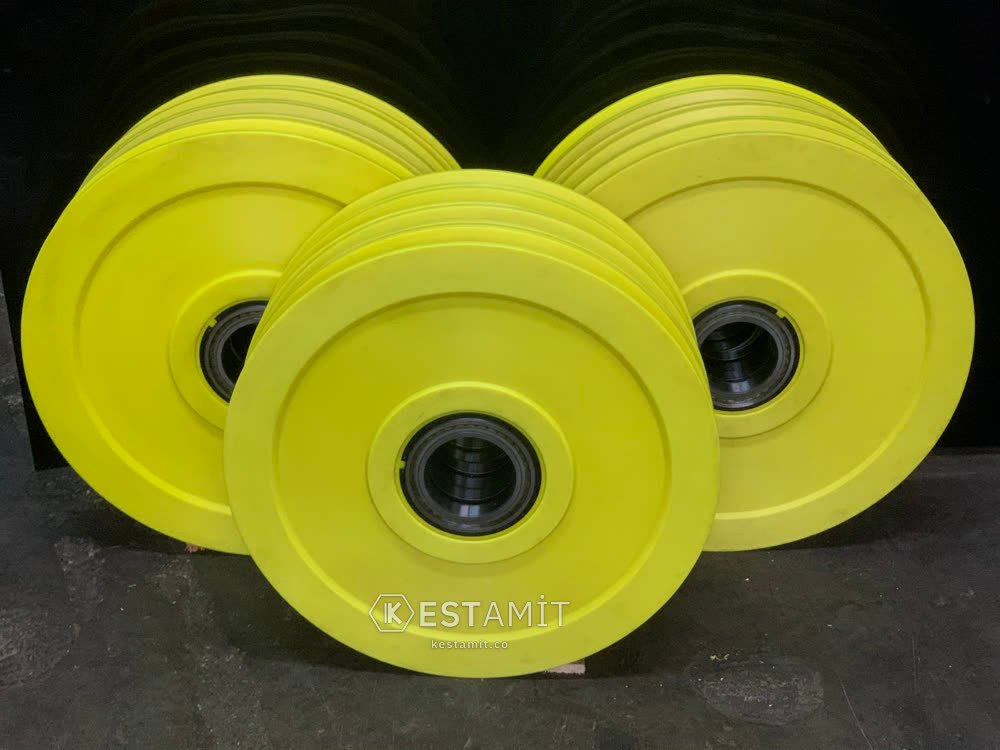
Bronze bushings have been the habit of the machine world for years. Cast nylon does not replace them everywhere, but in many places it makes more sense.
Side by side
| Topic | Cast nylon (PA6G) | Tin bronze |
|---|---|---|
| Density | 1.15 g/cm³ | About 8.8 g/cm³ |
| Strength | About 80 MPa | Much higher |
| Continuous temperature | About 100 °C | Much higher |
| Heat conduction | Low | High |
| Moisture | Absorbs, swells | Not affected |
| Lubrication | Little or none possible | Usually needed |
| Noise | Quiet, damping | Louder |
When to choose cast nylon
- When weight matters
- Where lubrication is difficult
- When quiet running is wanted
- At moderate loads below 100 °C
When to choose bronze
- Under high pressure and heavy shock loads
- In continuous use above 100 °C
- When heat must leave the part quickly
- For tight tolerances in permanently wet conditions
Mistakes when switching
- Keeping the same clearance. Cast nylon swells and expands.
- Not measuring temperature. Friction heat builds up more.
- Not checking load. The same size carries less load than bronze.
- Looking only at material price. Count maintenance and downtime too.
Weight example
A solid 100 mm rod, 1 metre long, weighs about 9 kg in cast nylon and about 69 kg in bronze. See the weight calculation.
Frequently asked questions
Is cast nylon stronger than bronze?
No. Bronze carries higher loads. The advantages of cast nylon are light weight, low lubrication needs and quiet running.
Can I replace a bronze bushing directly?
Often yes if load and temperature suit, but the clearance must be recalculated.
Which is cheaper?
For large parts cast nylon usually has a material cost advantage. Get a quote with your size for an exact comparison.
Figures are typical values published by manufacturers and vary with grade and test conditions. Ask us for exact values.