Basics
What is cast nylon?
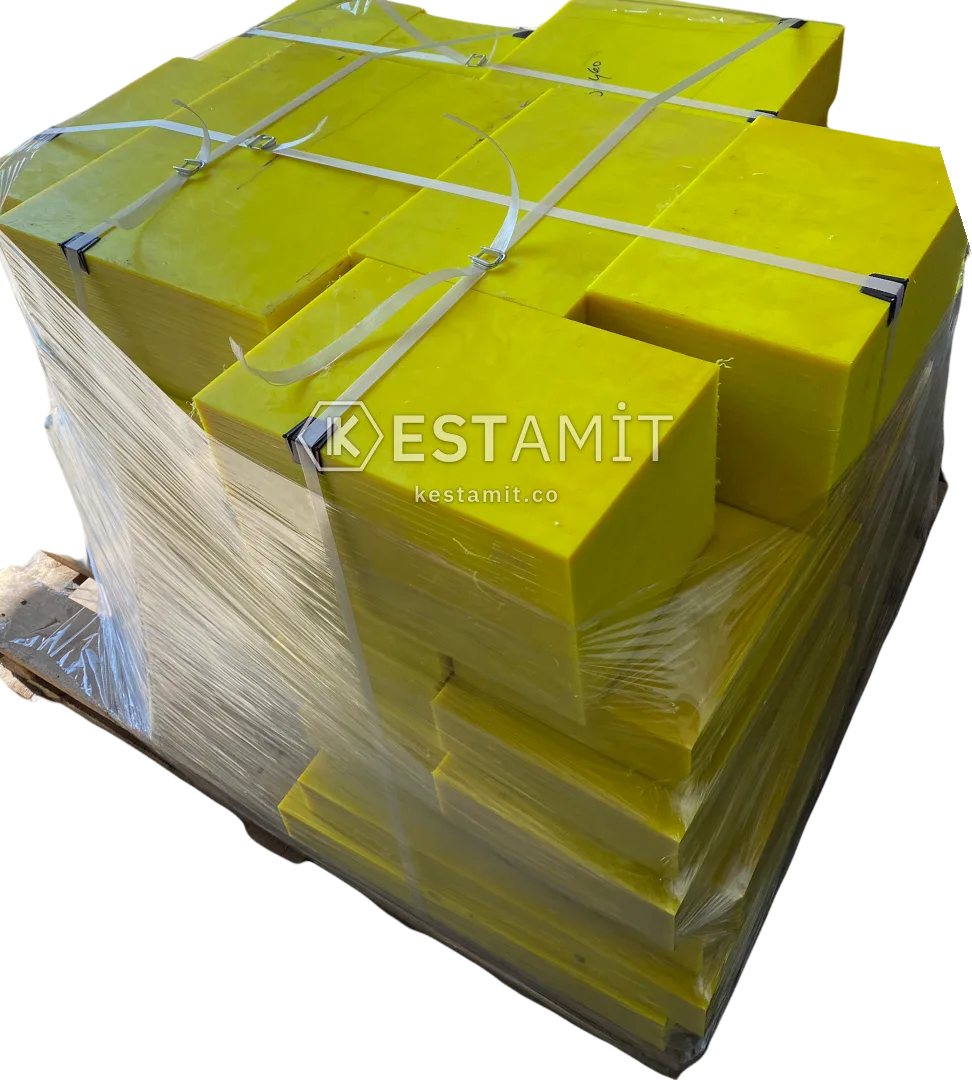
Cast nylon is produced as sheet, rod or tube and then machined into parts. It is often yellow, and cream is also common.
What is cast nylon used for?
It is used in parts that slide and wear. Replacing metal makes the machine lighter and quieter, and it is often kinder to the mating surface.
- Pulleys and sheaves
- Gears and sprockets
- Bushings and plain bearings
- Wear plates and slides
- Rollers, rails, guides and conveyor parts
Typical properties
| Property | Typical value |
|---|---|
| Density | 1.14 to 1.15 g/cm³ |
| Tensile strength | About 80 MPa |
| Hardness | About 80 to 85 Shore D |
| Continuous service temperature | -30 °C to +100 °C |
| Melting temperature | About 217 to 220 °C |
Advantages
- Light: about one seventh of the weight of a steel part of the same size.
- Wear resistant: long life in sliding parts.
- Rust free: no corrosion problem.
- Damping: absorbs vibration and noise better than metal.
- Easy to machine: turned, milled and cut on CNC.
- Large sections: casting allows thick sizes.
Limits
- Temperature: the continuous limit is about 100 °C. See temperature limits.
- Moisture: it absorbs moisture and its size can change a little.
- Acids: it does not resist mineral acids or oxidising agents.
- Load: at very high loads metal may be needed. See cast nylon vs bronze.
Frequently asked questions
Is cast nylon a plastic?
Yes. It is an engineering thermoplastic, far stronger than everyday plastics and used for machine parts.
Is cast nylon the same as nylon 6?
It belongs to the same family. Cast nylon is the type made by casting, which makes it harder and stiffer than extruded PA6.
Why is cast nylon yellow?
Yellow is a common standard colour that makes the material easy to recognise. Cream and other colours also exist.
Figures are typical values published by manufacturers and vary with grade and test conditions. Ask us for exact values.