Temperature and resistance
Cast nylon chemical resistance
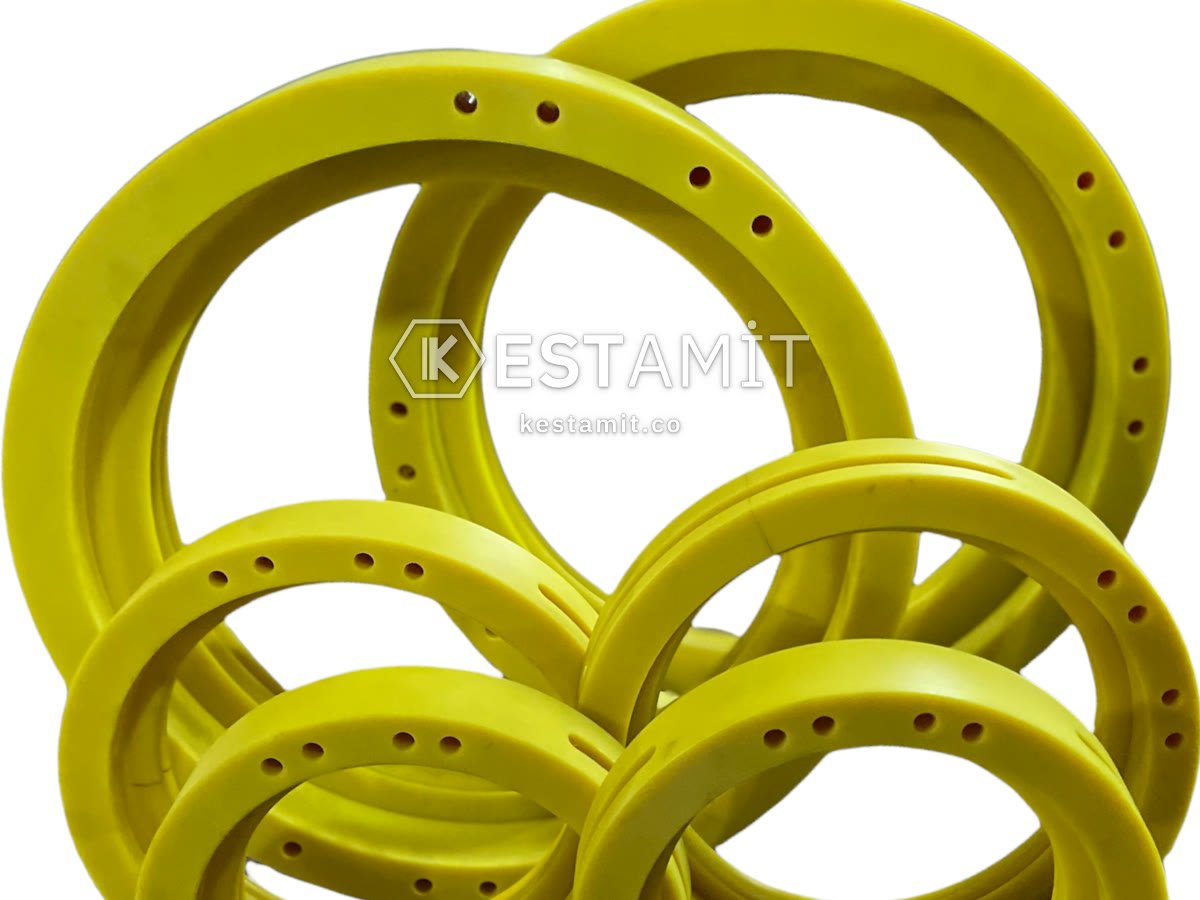
Chemical resistance affects part life as much as temperature and load. A chemical that is harmless at low concentration can damage the part at high concentration or high heat.
General resistance table
| Medium | Cast nylon |
|---|---|
| Oils and greases | Resistant |
| Fuels and hydrocarbons | Resistant |
| Alkalis (bases) | Resistant |
| Ethers, esters, ketones | Resistant |
| Mineral acids (hydrochloric, sulphuric, nitric etc.) | Not resistant |
| Some organic acids | Not resistant |
| Halogens (chlorine etc.) | Not resistant |
| Oxidising agents | Not resistant |
| Water and moisture | No chemical harm, but absorbs moisture |
The table gives direction. Temperature and concentration change the result. For a firm decision, test with your own chemical.
What to watch on site
- Cleaning chemicals: acidic or chlorinated cleaners can damage the surface.
- Temperature: chemical attack speeds up with heat.
- Constant wetting: moisture uptake changes size. See moisture and size change.
- Sunlight: polyamide is weak against long sun exposure.
What to use with acids
Where acids are present, plastics with higher chemical resistance are usually chosen. Polyethylene materials handle many acids well. See cast nylon vs UHMW-PE.
Examples from site
| Situation | Assessment |
|---|---|
| Hydraulic oil splash | Usually fine |
| Diesel and petrol contact | Usually fine |
| Alkaline cleaning such as caustic soda | Usually resists, check concentration and heat |
| Cleaning with hydrochloric acid | Not suitable |
| Chlorinated disinfectant | Risky with long contact |
| Cutting fluid | Depends on type, test it |
How to run a simple test
- Take a small piece of the same material.
- Note its size and weight.
- Keep it in the real chemical at the real temperature.
- Take it out and measure at intervals.
- Look for softening, cracking or colour change.
Part of any weight and size gain comes from liquid uptake. Softening and cracking are more serious signs.
How chemical attack damages a part
- Surface softening: wear speeds up.
- Swelling: size drifts and bushings tighten.
- Cracking: especially in stressed areas and around holes.
- Loss of strength: the part may look fine but fail under load.
Food and special sectors
Where cleaning chemicals are used, check the cleaner as well as the material. Food contact also needs a declaration of conformity. Ask for it at the quote stage, because it depends on grade and additive.
Cast nylon works well in oily environments, which is why it is common in bushings and gears.
What to include in your request
- Name and concentration of the chemical
- Working temperature
- Contact time: constant or splash?
Frequently asked questions
Does cast nylon resist oil?
Yes. It resists oils and greases and is common in oily machine environments.
Does cast nylon resist acid?
It does not resist mineral acids or some organic acids. Use another material where acids are present.
Can cast nylon be used with petrol and diesel?
It generally resists fuels and hydrocarbons. Temperature and additives can change the result, so test critical jobs.
Figures are typical values published by manufacturers and vary with grade and test conditions. Ask us for exact values.