Cast nylon parts
Cast nylon gears
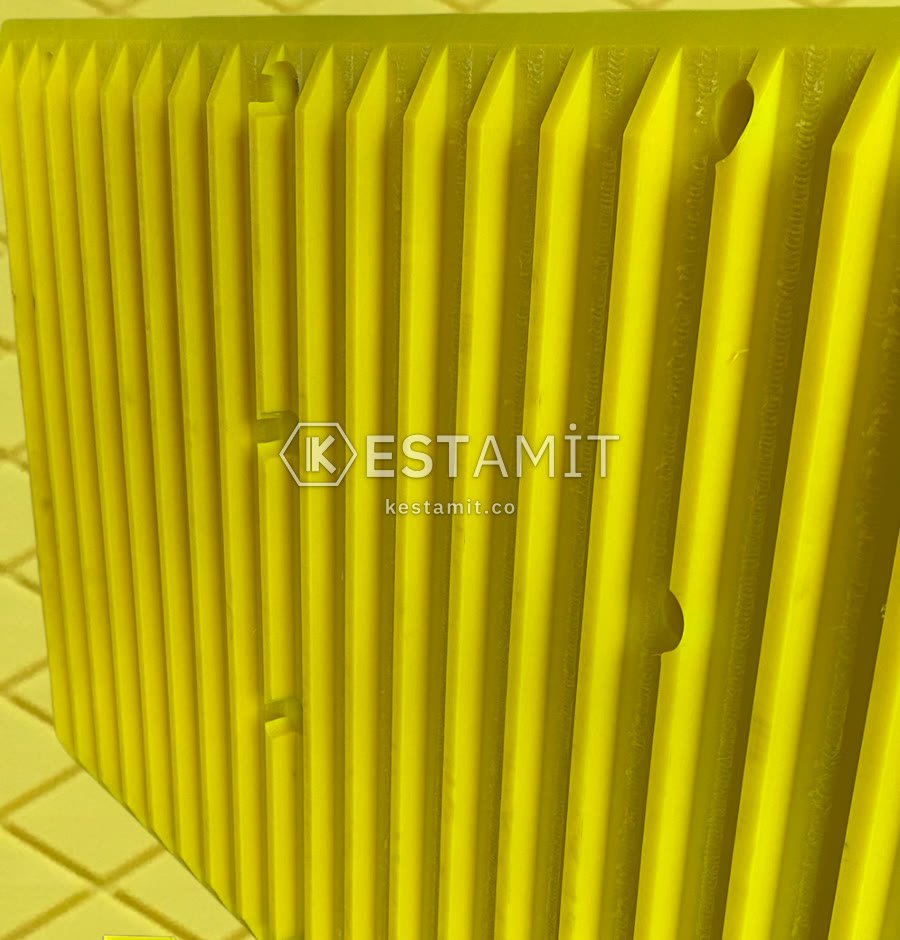
Plastic gears suggest small parts. Cast nylon is also used for large gears, because casting allows thick sections.
Why cast nylon gears?
- Quiet: damps vibration and reduces noise.
- Light: less rotating mass, less inertia.
- No corrosion: no rust in damp conditions.
- Can run without oil: useful where oil is unwanted, such as food machinery.
- Good for small batches: machining replaces mould cost.
A study at Pamukkale University in Türkiye reports two results for self-lubricating cast polyamide gears. Little heat forms in operation. Fatigue strength is higher than for polyamide. The same study names strength as the main limit of these materials.
Limits
- Load: it carries less than steel. For high torque, widen the teeth or use metal.
- Temperature: friction heat can build at the tooth face. See temperature limits.
- Size: moisture and heat change backlash. See moisture.
What should it run with?
A common pairing is a steel pinion with a cast nylon gear. Steel conducts heat and cast nylon keeps it quiet. The small gear turns more often, so plan for its heating and wear.
Does it need oil?
It can run dry, but a little lubrication extends life. Where lubrication is hard, consider oil-filled cast nylon.
Designing for strength
- Larger module: bigger teeth and a stronger tooth root.
- Wider face: load spread over more area.
- Right mating gear: a steel pinion removes heat.
- Lubrication: less friction and heat.
The hub and keyway
The hub is the most stressed point. A keyway is not as strong as in metal and can crush and loosen over time.
| Method | When |
|---|---|
| Longer key or wider hub | Moderate load |
| Cast nylon rim on a metal hub | High torque |
| Press-fit metal sleeve | Frequent removal and high load |
| Bolted flange | Large gears |
Backlash and heat
As cast nylon heats and absorbs moisture, tooth thickness grows. If backlash closes, the teeth bind, then heat more. Give more backlash than for steel, calculated at working temperature.
Quiet has a cost
A quiet gear also gives fewer warning sounds. Check the tooth face and temperature at intervals. Shine, softening or fine yellow dust can be early warnings.
What to send us
Module, number of teeth, face width, hub size, keyway or bore and quantity. Attach a drawing if you have one. See the quote guide.
Frequently asked questions
Can a cast nylon gear replace steel?
At low and moderate loads it often can, running quiet and light. High torque and hot running need steel.
How long does a cast nylon gear last?
Life depends on load, speed, temperature and lubrication. One figure would not be right.
Can you copy a broken gear?
A sample helps, but measuring a worn gear needs care. A drawing or module data is best.
Figures are typical values published by manufacturers and vary with grade and test conditions. Ask us for exact values.