Cast nylon parts
Cast nylon pulleys and sheaves
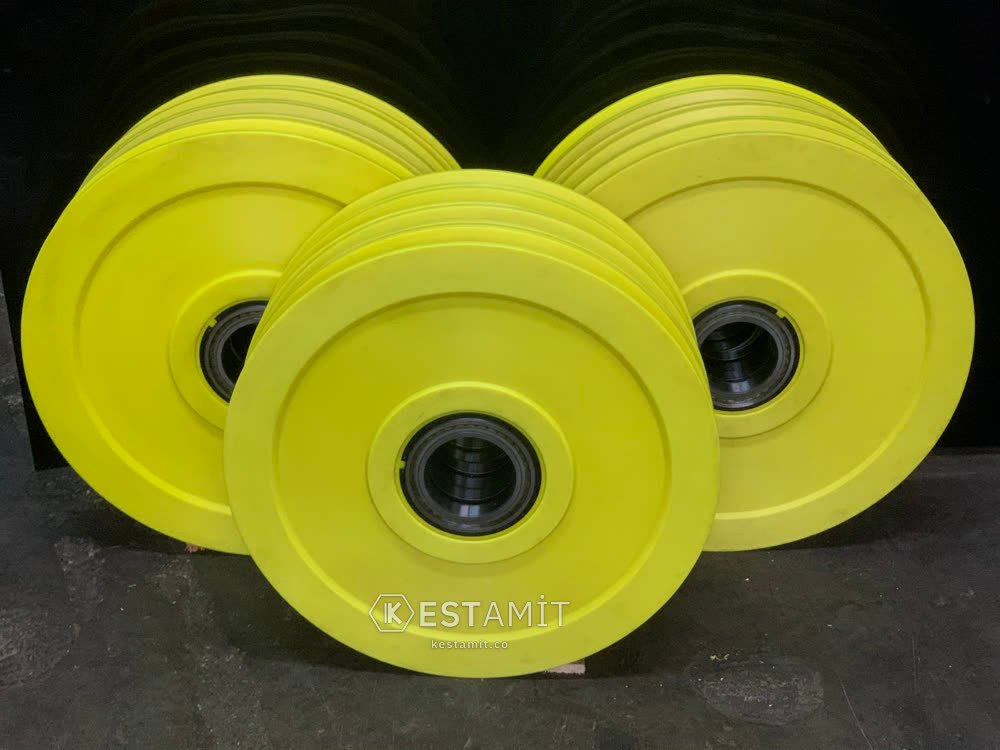
Pulleys are one of the best known uses of cast nylon. The yellow pulleys with bearings in our photos are an example.
Why a cast nylon pulley?
- Light: with a density of 1.15 g/cm³ it weighs about one seventh of a steel pulley. Fitting is easier and the structure carries less load.
- Less wear: a non-metal surface tends to be gentler on rope.
- Quiet: it damps vibration better than metal.
- No rust: an advantage in corrosive conditions.
Manufacturers also describe cast nylon as a metal replacement for sheaves and sprockets.
How big is the weight difference?
A 1000 × 2000 × 20 mm plate weighs 46 kg in cast nylon and 314 kg in steel. The same ratio applies to pulleys, although the body may be designed thicker than metal.
Design points
Bearing seat
Cast nylon is not as hard as metal and expands more with heat. Do not copy the bearing fit from a steel pulley. Design the seat properly from the start.
Load
The pressure on the pulley must stay within cast nylon's limits. Very heavy loads on small diameters may need metal.
Groove profile
We machine the groove to the rope diameter on CNC. See CNC machining.
Temperature and moisture
Outdoors in the sun, allow for polyamide's UV weakness. Moisture can change size.
What shortens pulley life
- Wrong groove: the rope pinches or rubs the sides.
- Loose bearing seat: as cast nylon heats, the seat can loosen and the bearing may turn in it. Use a circlip, metal sleeve or correct fit.
- Abrasive dust: wear speeds up. Consider MoS2.
- Side load: an angled rope loads the flanges. Check the alignment.
Regular checks
| Check | What to look for |
|---|---|
| Groove | Deepening, rope marks, notches |
| Bearing | Play, noise, seat loosening |
| Body | Cracks, especially around the hub |
| Alignment | Side load, pulley walking |
As the groove deepens the rope wraps more. Past a limit the pulley must be replaced. Set that limit by your maintenance instructions.
The pulleys in our photos
The bearing pulleys on our site have a thick section, a relieved body face and a separate hub. The hub carries the bearing and the body stays light. The key point is how the metal bearing sits in the yellow body.
Switching from metal
Change one pulley first and watch it. Record temperature, noise and groove wear. If results are good, move on. For heavy cranes, review the load calculation and any specification first. For lifting safety parts, follow regulations and the equipment maker's instructions.
What to send us
Outer diameter, groove profile, hub size, bearing type, quantity and load. Use the quote form.
Frequently asked questions
How much load can a cast nylon pulley carry?
It depends on diameter, groove and rope. One figure would mislead. Tell us your application.
Do you make pulleys with bearings?
As our photos show, yes. Add the bearing type to your request.
Can it replace an old metal pulley directly?
It may fit, but check load and temperature first.
Figures are typical values published by manufacturers and vary with grade and test conditions. Ask us for exact values.